Digitize Sushi Restaurant: Boost Online Revenue
Online orders for sushi restaurants: direct orders instead of platform commissions boost profit. Practical tips for delivery times and customer retention.
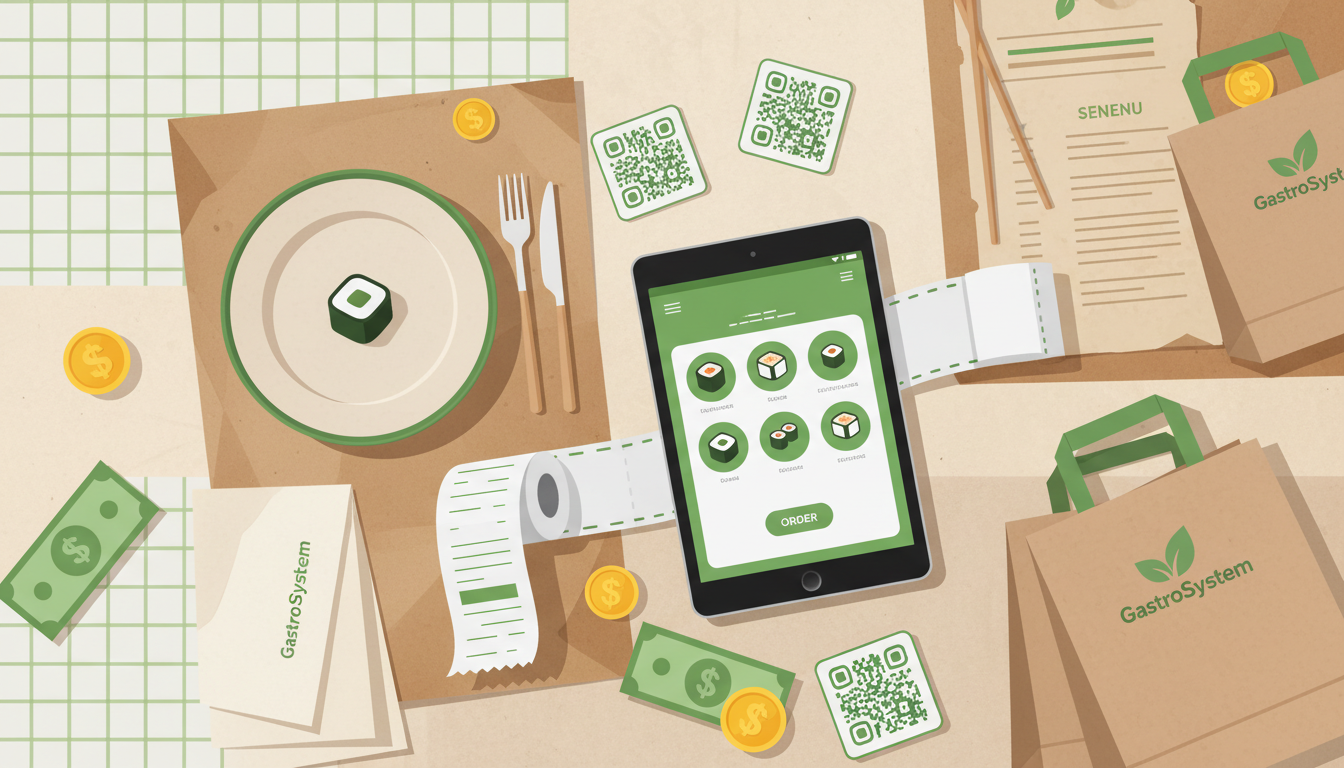
Digitization has fundamentally changed the restaurant industry – and sushi restaurants in particular face unique challenges. While pizza and burgers have long been successfully ordered online, many sushi operators still struggle with digital transformation. Yet there’s enormous potential here: restaurants with professional online ordering systems increase their revenue by an average of 23%.
In this guide, we’ll show you how to successfully digitize your sushi restaurant without sacrificing quality and profit margins.
Why Online Orders Are Especially Important for Sushi Restaurants
Sushi is more than just food – it’s an experience. Perfect presentation, absolute freshness of ingredients, and artful preparation make every order something special. These very characteristics make digitizing sushi restaurants both challenging and particularly lucrative.
The numbers speak for themselves: 47% of Germans order food online at least once per month. For sushi, the trend is even higher, as many customers prefer the relaxed atmosphere at home to often hectic restaurant environments. A well-positioned sushi restaurant can increase its revenue by 23-35% through online orders.
Let’s look at a concrete example: The traditional sushi bar “Sakura” in Munich had a monthly revenue of €18,000 in 2023. After introducing a professional online ordering system, revenue rose to €24,500 – that’s €6,500 more per month, without additional seating or staff.
The reason is clear: while only 25-30 seats are available in the restaurant, theoretically unlimited orders can be processed online simultaneously. The kitchen becomes the bottleneck – and this is precisely where the art of optimal digitization lies.
Mastering the Biggest Challenges in Sushi Online Orders
Unlike other dishes, online ordering of sushi brings special challenges that you must consider from the start.
Freshness and quality during transport come first. Sushi must be consumed within 2-3 hours of preparation – ideally immediately. This means: your delivery radius can’t be too large, and packaging must be perfectly thought out.
Digitally mapping complex menus is the second major hurdle. A typical sushi restaurant has 80-150 different items: nigiri in various versions, maki rolls, inside-out rolls, sets, sides, beverages. Add allergen labeling, spice levels, and possible modifications. All of this must be presented clearly and appetizingly.
Communicating realistic delivery times separates professionals from amateurs. While a burger is ready in 5 minutes, a sushi set needs at least 15-25 minutes of pure preparation time. Plus delivery. Those who make unrealistic promises here will earn bad reviews.
The Most Common Mistakes in Online Sushi Sales:
- Delivery radius too large: More than 15 minutes travel time harms quality
- Poor product photos: Customers buy with their eyes – especially for sushi
- Unrealistic delivery times: 30 minutes is often too tightly calculated
- Inadequate allergen labeling: Legal problems guaranteed
- Overly complicated menu structures: Customers abandon if they can’t navigate
- Unprofessional packaging: Mushy sushi leads to negative reviews
Menu Digitization: Present Sushi Variety Clearly
Your digital menu is your most important sales tool. This is where customers decide whether to order or switch to the competition. A well-thought-out menu structure can increase your conversion rate by up to 35%.
Optimal categorization is based on your customers’ thinking, not your kitchen logistics:
| Category | Subcategories | Average Number |
|---|---|---|
| Sushi Sets | For 1-2 people, For 3-4 people, Vegetarian | 8-12 sets |
| Nigiri | Fish, Seafood, Vegetarian | 15-25 pieces |
| Maki | Classic, Inside-Out, Special Rolls | 20-35 rolls |
| Hot Dishes | Soups, Tempura, Main courses | 10-15 dishes |
| Beverages & Desserts | Sake, Beer, Tea, Desserts | 15-20 items |
Professional product images are mandatory. Studies show: restaurants with high-quality photos have a 35% higher conversion rate. Invest once in €800-1,500 for a food photographer – this pays off after just 2-3 months.
Legally compliant allergen labeling is not only mandatory but also builds trust. Customers with allergies become particularly loyal regulars when they feel safe. Use clear symbols and additional written notices.
“Since we completely redesigned our menu and had professional photos taken, our average order value has increased from €23 to €31. Customers simply order more when they can see what they’re getting.”
Kenji Tanaka, Owner “Sushi Zen” Berlin
Delivery Times and Logistics: Getting Sushi Fresh to Its Destination
Logistics determine the success or failure of your online business. Sushi forgives no mistakes – mushy rice or warm fish immediately mean bad reviews and lost customers.
Calculate realistic preparation times:
- Small order (up to 20 pieces): 15-18 minutes
- Medium order (20-40 pieces): 20-25 minutes
- Large order (40+ pieces): 25-35 minutes
- Sets with hot components: +5-8 minutes
Always calculate a buffer of 5-10 minutes. Better to surprise positively than create stress.
The optimal delivery radius depends on your environment but should never exceed 15 minutes travel time. In big cities, this often means only 3-5 kilometers; in rural areas, it could be 8-10 kilometers.
Packaging: Balancing Quality, Sustainability, and Cost:
Packaging costs per order typically range between €1.20 and €2.80. Here’s the breakdown:
- Standard packaging: €1.20-1.60 (plastic boxes, simple bags)
- Premium packaging: €1.80-2.30 (high-quality boxes, separate compartments)
- Sustainable packaging: €2.00-2.80 (compostable materials, bamboo boxes)
Invest in the middle category – it offers the best price-performance ratio and shows quality consciousness without destroying profit margins.
Commission-Free Ordering Systems: More Profit with Every Sushi Set
This is where it gets really interesting for your profit margin. Most restaurants start with platforms like Lieferando without thinking through the long-term costs.
Cost comparison at €10,000 monthly revenue:
| System | Monthly Costs | Commission | Total Costs | Savings vs. Lieferando |
|---|---|---|---|---|
| Lieferando | €0 | 13-15% | €1,300-1,500 | - |
| Flat-rate system | €89-199 | 0% | €89-199 | €1,100-1,400 |
| Own system | €300-800 | 0% | €300-800 | €500-1,200 |
The calculation is clear: From €2,000 monthly revenue through online orders, a commission-free system pays off.
But it’s about more than just money. With your own system:
- You keep all customer data for your own marketing
- You’re independent of external platforms and their rules
- You can build direct customer relationships
- You have full control over prices and promotions
Customer Retention in the Sushi Business: Win Regular Customers Digitally
Regular customers are the heart of every successful restaurant. This is especially true in the sushi business: regular customers order 3.2x more frequently than new customers and spend 40% more per order.
Use push notifications strategically:
- Announce new sushi creations (max. 1x per week)
- Personal birthday greetings with 15% discount
- “Happy Hour” promotions from 4-6 PM during low occupancy
- Weather-based messages: “Perfect sushi weather today – 10% off all sets”
Set up the loyalty program correctly: The classic “10th time free” works excellently digitally too. Even better: a point system where customers collect one point for every euro spent. 100 points = €10 voucher.
Personalized recommendations based on order history:
- “Your favorite maki are available again”
- “Customers who love salmon-avocado like you also try…”
- “You’ve ordered the sashimi set 5 times – do you know our premium sashimi yet?”
These personalized approaches increase repurchase rates by an average of 25-30%.
Technical Implementation: The Right System for Your Sushi Restaurant
Now it gets concrete. The technical infrastructure must integrate seamlessly into your existing workflow without overwhelming the team.
Integration with the POS system is essential. Online orders must be automatically transferred to your kitchen and POS system. Manual entries are a waste of time and source of errors.
Mobile app vs. web ordering – the eternal question:
Mobile App Advantages:
- Push notifications possible
- Higher customer retention
- Faster ordering process for regular customers
- Offline functions possible
Web Ordering Advantages:
- No app installation required
- Works on all devices
- Easier for first-time customers
- Lower technical complexity
Our recommendation: Start with a responsive website and add an app later when online business is running.
Staff Training: From Analog to Digital in 2 Weeks:
Week 1: Basics and first orders
- Day 1-2: Learn the system, first test orders
- Day 3-4: Establish kitchen-online-order workflow
- Day 5-7: Problem solving and first real orders
Week 2: Optimization and routine
- Day 8-10: Refine processes, optimize timing
- Day 11-14: Independent processing, discuss emergency plans
A system like GastroSystem makes this integration particularly easy, as it’s specifically developed for restaurants and works with a fair flat-rate model without hidden commissions. This way you maintain full control over your costs and customer data.
The 10-Step Checklist for Sushi Restaurant Digitization
Phase 1: Preparation (Week 1-2)
- Analyze and digitize menu – define categories, check prices
- Create professional product photos or photograph yourself
- Complete allergen labeling – legally compliant marking of all dishes
- Define delivery radius – maximum 15 minutes travel time
Phase 2: System Selection (Week 3)
- Compare providers – commission models vs. flat-rate systems
- Check POS system integration – ensure seamless connection
- Conduct test orders – test and optimize workflow
Phase 3: Go-Live (Week 4-5)
- Train team – prepare all employees for the new system
- Start soft launch – initially inform only regular customers
- Optimize system – adjust based on initial experiences
Digitizing your sushi restaurant is no longer an option – it’s a necessity to remain competitive. With the right strategy and appropriate tools, you’ll not only increase your revenue but also build a loyal customer base.
The key lies in balancing technology with traditional sushi artistry. Use digital possibilities, but never forget that quality and freshness remain your most important selling points.
Are you ready to take your sushi restaurant to the next level? Start today with GastroSystem and discover how simple professional online ordering without commissions can be. Your customers – and your profit margin – will thank you.